Black Winter Outfit Flat Lay: Puffer, Hoodie, Sneakers
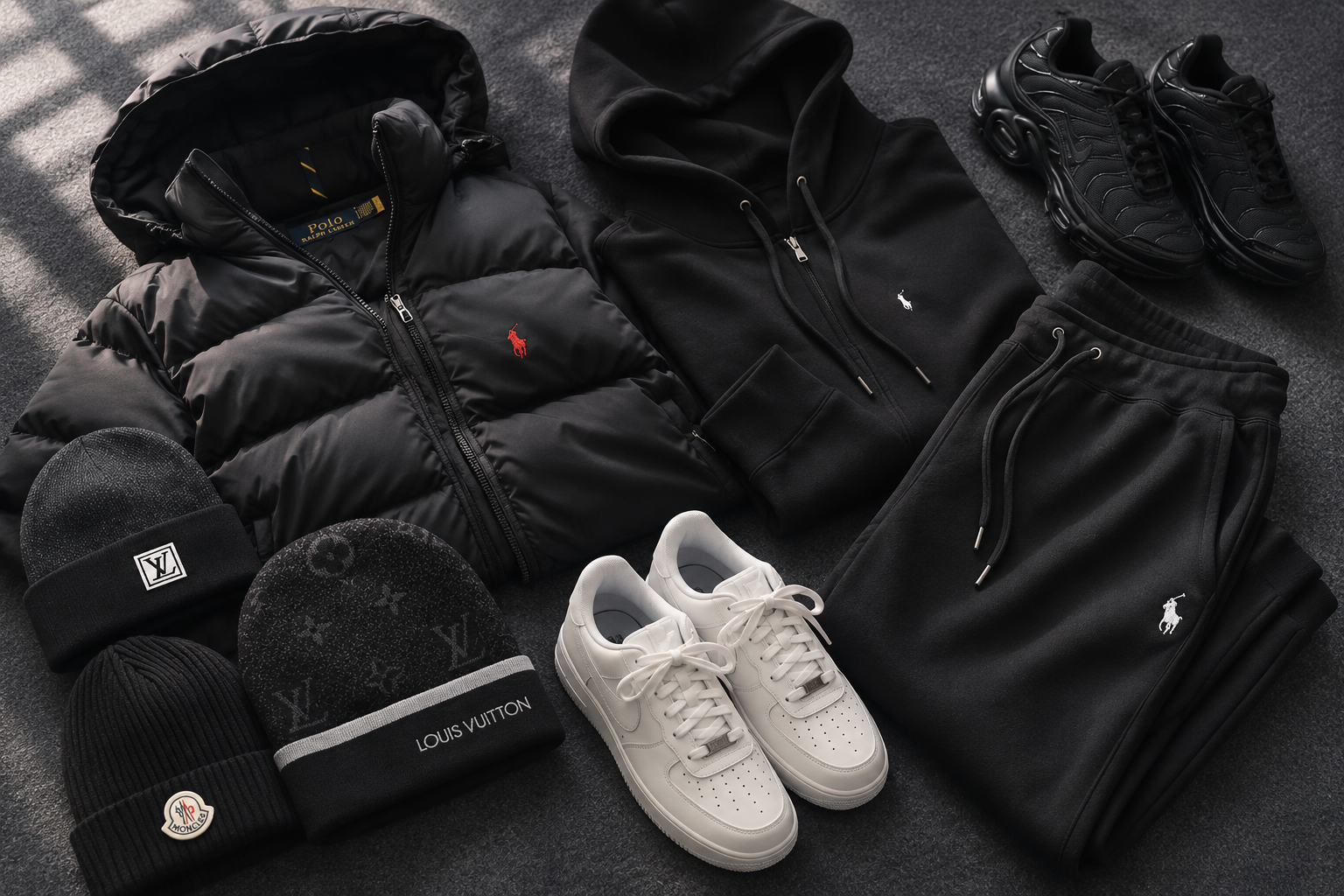
Daniel FosterEditor-in-ChiefPublié le 23 novembre 2026Creating a Cohesive Winter Look with Black Winter casual outfits can easily look cluttered with multiple pieces. This flat lay uses black as the main color, arranging a puffy jacket, hoodie, sweatpants, and several knit accessories together, with white low-top sneakers as a bright focal point for a clear black-and-white contrast. 
Creating a Cohesive Winter Look with Black
Winter casual outfits can easily look cluttered with multiple pieces. This flat lay uses black as the main color, arranging a puffy jacket, hoodie, sweatpants, and several knit accessories together, with white low-top sneakers as a bright focal point for a clear black-and-white contrast.
Color Suggestions
The black jacket and black bottoms create a continuous dark base, ideal for those who prefer a sleek silhouette. The hoodie sits between the jacket and pants, adding depth with its hood, drawstrings, and zipper details without breaking the monochrome theme.
White sneakers are the most striking bright element. Against an all-black outfit, the shoe's shape and laces stand out, preventing the dark combination from looking dull. For a more understated look, opt for the black sneakers shown, keeping footwear in line with the clothing's color.
Accessories remain predominantly black, including a knit beanie with letter graphics and other black hats. They help maintain the color theme while adding variety through different textures, folded brims, and patterns. Small accents of red, white, and lettering are also visible; these should be kept minimal to avoid introducing too many bold colors.
How to Arrange Layers for Flat Lays
When creating a flat lay, start by identifying the largest item as the visual anchor. In this image, the puffy jacket is on the left, with its silhouette, quilted seams, and zipper forming the main structure. The hoodie and sweatpants are arranged on the center-right, completing the vertical relationship of the clothing. Footwear is placed at the bottom and top, creating visual points of varying sizes.
You can follow this order:
Spread out the jacket first, keeping the hood, zipper, and quilting visible.
Place the hoodie next to or slightly overlapping the jacket, showing the hood, drawstrings, pockets, and body shape.
Arrange the sweatpants with natural folds, keeping the waistband, drawstring, and pockets visible.
Position the white sneakers in an open area as a bright focal point; place black shoes at the top or edge to balance dark areas.
Group knit beanies at the bottom or side to avoid covering key details of the jacket and shoes.
Ready-to-Use Outfit Formulas
For a bolder look, pair a black puffy jacket, black hoodie, black sweatpants, and white low-top sneakers. This keeps clothing uniform while the shoes provide contrast, perfect for those who like clear visual interest.
For a more understated option, switch to black sneakers and add interest through the beanie's lettering, small logos, or different textures. This creates a more monochromatic look, drawing attention to garment silhouettes, seams, pockets, and accessory details.
What You Can Tell from This Image
This flat lay clearly shows color relationships, layering, jacket quilting, pockets, shoe shapes, and some lettering and graphic details. It's useful for planning black-and-white color schemes and winter casual styling.
However, it cannot show fit, comfort, warmth, material composition, sizing, durability, or traction. For specific product choices, refer to on-body photos, flat measurements, and product specifications.
À propos de Daniel Foster
Kakobuy and Yupoo agent workflows, replica-apparel quality control, and cross-border shipping logistics.
Daniel Foster is Editor-in-Chief of Kakobuy Yupoo Review, overseeing all reviews and maintaining the testing standards. Coverage includes Kakobuy and Yupoo agent workflows, replica-apparel quality control and cross-border shipping, with both garment use and agent response included in reviews. Daniel wears every apparel item for at least three days before scoring and photographs all tags, stitching and hardware. Agent response times are recorded to the minute, allowing the article to describe both the physical checks and the waiting time within the service process.