Tommy Hilfiger Sunglasses QC: Lenses, Frames, Packaging
Daniel FosterEditor-in-ChiefPublished 21 October 2026What Purchasing Questions Tommy Hilfiger Sunglasses QC Photos Can Answer Before placing an order, checking QC photos is not about verifying authenticity or guaranteeing quality from a few pictures, but about confirming whether this specific item has visible issues that would affect your purchase decision: any obvious scratches on the lenses, whether the frame is misaligned, whether the temple hinges are abnormal, whether the logo position matches the product page, whether packaging and [acces
What Purchasing Questions Tommy Hilfiger Sunglasses QC Photos Can Answer
Before placing an order, checking QC photos is not about verifying authenticity or guaranteeing quality from a few pictures, but about confirming whether this specific item has visible issues that would affect your purchase decision: any obvious scratches on the lenses, whether the frame is misaligned, whether the temple hinges are abnormal, whether the logo position matches the product page, whether packaging and accessories are complete, and whether the existing photos are sufficient to support these judgments. 🔍
This guide is for buyers who have already opened the specific product page on fashion-reps and are about to inspect a pair of Tommy Hilfiger sunglasses before warehouse shipment. After reading, you should be able to do three things: save visible evidence, list angles that still need additional photos, and decide whether to consult, request handling, or hold the shipment.
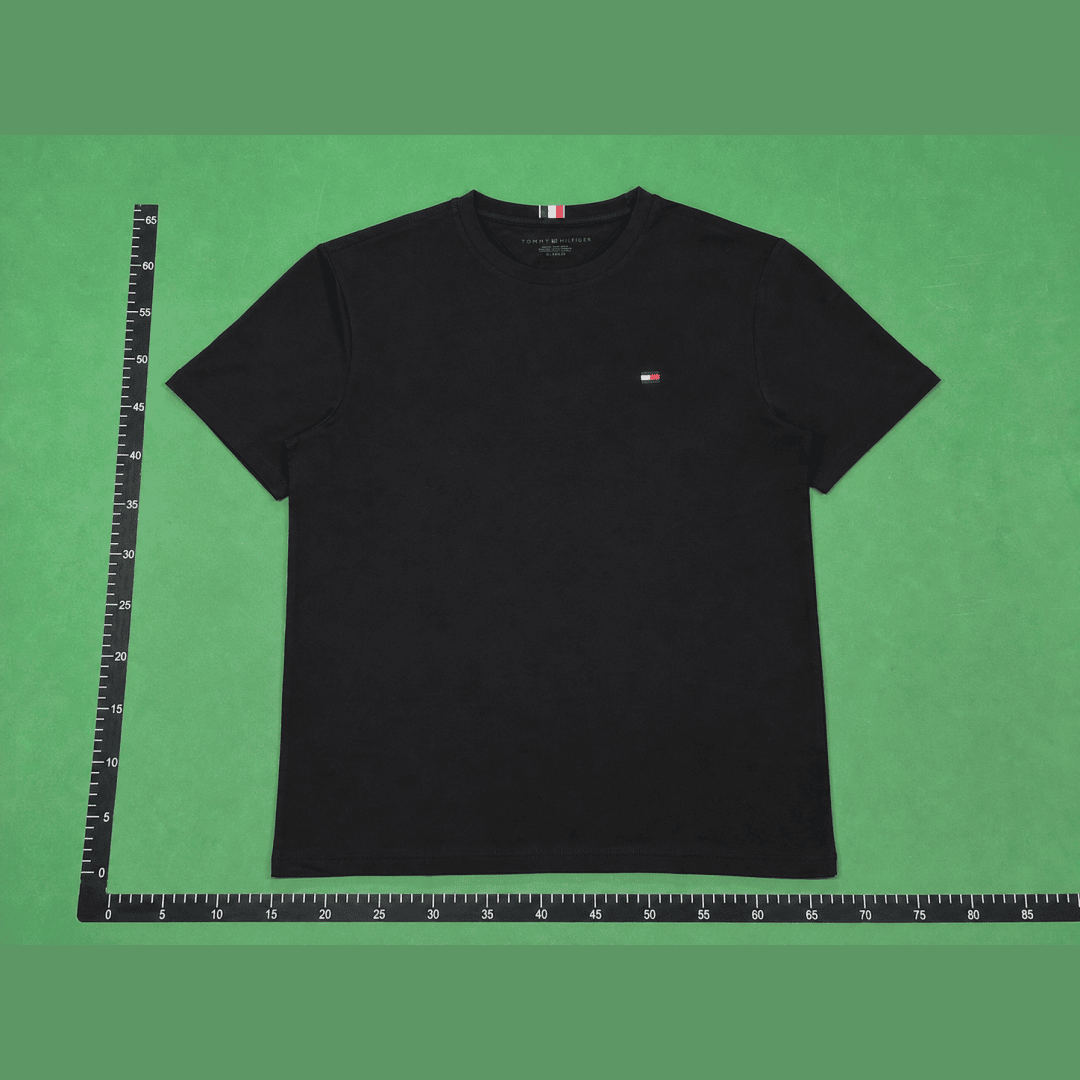
First, set clear evidence boundaries: the designated photo provided in this case actually corresponds to a Tommy Hilfiger white crew-neck T-shirt, not sunglasses, so it cannot be used as evidence for the sunglasses' lenses, frame, or packaging. It is only a record of the provided material and does not support any judgment on the sunglasses' appearance, material, or quality.

Check Style, Color, and Visible Specs on the fashion-reps Product Page
First, open the specific product page for the target sunglasses; do not infer from the homepage, brand page, category page, or other product images. Confirm the product name, style, color, and visible specifications shown on the page, and note the inspection date. Price, stock, seller information, accessories, and purchase process may change, so do not treat other pages or old screenshots as current product facts.
Focus on the following when checking:
- Does the product name clearly indicate Tommy Hilfiger sunglasses, not clothing, shoes, or other accessories?
- Do the displayed color, lens appearance, and frame style match the order under inspection?
- Does the product description explicitly list a case, cleaning cloth, pouch, or other accessories?
- Does the page provide size information such as lens width, bridge width, or temple length?
- Is there a View QC Photos entry on the current page?
If the page only shows generic product images, tabs, or blanks, do not treat those images as QC evidence for this order. 📋
Obtain the Actual QC Photos for This Item via View QC Photos
After confirming the product page, click the button named View QC Photos to enter the QC gallery for this item. Do not guess the QC URL based on the product name, and do not mix in images from other products, brand pages, or category thumbnails.
Once in the gallery, first confirm that the images indeed belong to the current product, then review each one. You can record:
- Number of images and shooting angles.
- Whether the lens front, sides, and edges are visible.
- Whether both temples, hinges, and nose pad areas are visible.
- Whether the case, cleaning cloth, tags, or outer packaging are visible.
- Whether there are duplicate images, excessive blur, or significant obstructions.
If the gallery does not show product identification information, or if the images do not match the product page, record this as an item to confirm rather than assuming the images belong to the order. Actual QC photos can help identify visible issues but cannot alone prove brand authenticity, material grade, or long-term durability. ⚠️
Check Lens Color, Edges, Reflections, and Obvious Scratch Evidence
First, look at the lens front. Record the left and right lenses separately; do not just write "overall normal." Observe for obvious scratches, white spots, bubbles, cracks, chips, or unusual reflections. If the photo has strong light reflections, fine scratches may be hidden, so write "no obvious scratches visible from current angle" rather than "lenses are flawless."
Then compare the color and light transmission of the left and right lenses. Under similar lighting, they should be roughly consistent; if one side is noticeably different in color, shows unnatural color bands at the edges, or has unexplained patches on the surface, request additional close-ups from the same angle. Different lighting can change color perception, so color differences are only a signal for further confirmation.
When checking lens edges, look for chips, burrs, indentations, and uneven assembly. If there is a visible gap between the lens and frame, or if the left and right lenses are asymmetrically positioned in the frame, record the specific location and photo number. Do not mistake ordinary light reflections on the screen for scratches, and do not infer UV protection or polarization from photo clarity.
Inspect Frame Joints, Nose Pads, Temples, and Logo Position
When inspecting the frame front, observe whether the left and right rims are noticeably skewed, and whether the bridge has cracks, chips, or uneven deformation. Combine front and side photos; a single angled shot is usually insufficient to judge overall alignment.
Temples are an easily missed area. Confirm that both temples are visible, and check for visible scratches, cracks, or deformation at the temple tips, and for looseness, misalignment, or abnormal gaps near the hinges. If the photos do not show the temples unfolded, you cannot judge opening/closing resistance, comfort, or actual sturdiness.
When checking logos, only record the position, orientation, visibility, and any obvious misalignment. For example, write "text visible on inner right temple, but current resolution insufficient to read full content." Do not treat a partial logo as proof of authenticity, and avoid conclusions like "genuine," "original factory," or "guaranteed authentic."
Check the nose pads and bridge area for missing parts, misalignment, looseness, or obvious stains. If there is no close-up of the nose pads, mark as "not fully visible" rather than assuming they are intact. 🕶️
Verify Packaging, Accessories, and Whether Photo Angles Are Sufficient for Judgment
If the product page lists a case, cleaning cloth, pouch, or other accessories, compare the page's stated contents with what is actually visible in the QC photos. Do not assume accessories are included based on brand conventions if not explicitly listed on the page.
You can use the following brief recording format:
- Visible facts: What can be directly seen in the QC photos.
- Uncovered areas: Which parts have no photos or are obstructed.
- Editorial judgment: Whether the evidence is sufficient to proceed with shipment.
- Next action: Request photos, consult, request handling, or hold the order.
For example, "Visible facts: No obvious cracks on lens front under current lighting; Uncovered area: No close-up of left temple hinge; Editorial judgment: Cannot confirm hinge condition; Next action: Request close-up of left temple unfolded." This kind of record is easier to review than "looks good."
If QC photos include only front views without temples, hinges, lens edges, or packaging, the evidence completeness is limited. The fewer photos, the less you should turn "no issues seen" into "no issues exist."
Separately Record Visible Facts, Pending Photos, and Editorial Judgment
Before deciding to ship, create an order-level inspection record including at least product name, inspection date, QC photo coverage, visible issues, uncovered areas, and next action. Do not upload or share order numbers, full shipping labels, payment cards, passports, or other personal information.
You can quickly grade as follows:
- Evidence relatively complete: Clear photos of lens front and back, frame front, both temples, hinges, nose pads, and main accessories, with no obvious visible issues affecting purchase.
- Evidence limited: Some lenses and frame visible, but key joints, edges, or accessories lack photos.
- Judgment should be paused: Images do not match the product, severely blurry, reused from other products, or show cracks, obvious chips, severe misalignment, etc.
"No obvious issues found" only means no obvious issues were seen given the current photos, angles, and clarity. It does not equate to authenticity confirmation, material confirmation, comfort confirmation, or after-sales outcome confirmation.
Final Action: Decide on Additional Photos, Consultation, or Order Hold Based on Evidence Completeness
If the key areas of lenses, frame, and packaging are clearly visible and no obvious cosmetic issues affecting use are found, you can keep the inspection record and then decide whether to proceed with shipment according to the platform's current process. If only one angle is missing, first request targeted additional photos, such as lens edges, left and right hinges, inner temple logos, or accessories overview.
If you find obvious scratches, cracks, chips, severe frame misalignment, temple joint abnormality, or the product shown does not match the order, hold the shipment and consult the platform or seller for handling. Do not interpret unconfirmed parts as normal, and do not promise return/exchange results without physically holding the item.
This QC check does not save a fixed amount of money, but reduces potential future shipping costs, handling fees, and time loss caused by obvious cosmetic issues, missing accessories, or insufficient information. It also adds time cost for waiting for additional photos, consultation, or re-confirmation. It suits buyers who care about appearance consistency, need to verify accessories, or want to clear problem orders before consolidation; it is not for buyers who treat QC photos as a guarantee of brand authenticity, material performance, or after-sales success.
About Daniel Foster
Kakobuy and Yupoo agent workflows, replica-apparel quality control, and cross-border shipping logistics.
Daniel Foster is Editor-in-Chief of Kakobuy Yupoo Review, overseeing all reviews and maintaining the testing standards. Coverage includes Kakobuy and Yupoo agent workflows, replica-apparel quality control and cross-border shipping, with both garment use and agent response included in reviews. Daniel wears every apparel item for at least three days before scoring and photographs all tags, stitching and hardware. Agent response times are recorded to the minute, allowing the article to describe both the physical checks and the waiting time within the service process.